
Are You Damaging Your Teeth While You Sleep? What to Know About Night Guards and Teeth Grinding
You can brush twice a day, floss carefully, and keep up with your dental visits, and still be putting significant pressure on your teeth for hours without realizing it.
The reason? Teeth grinding.
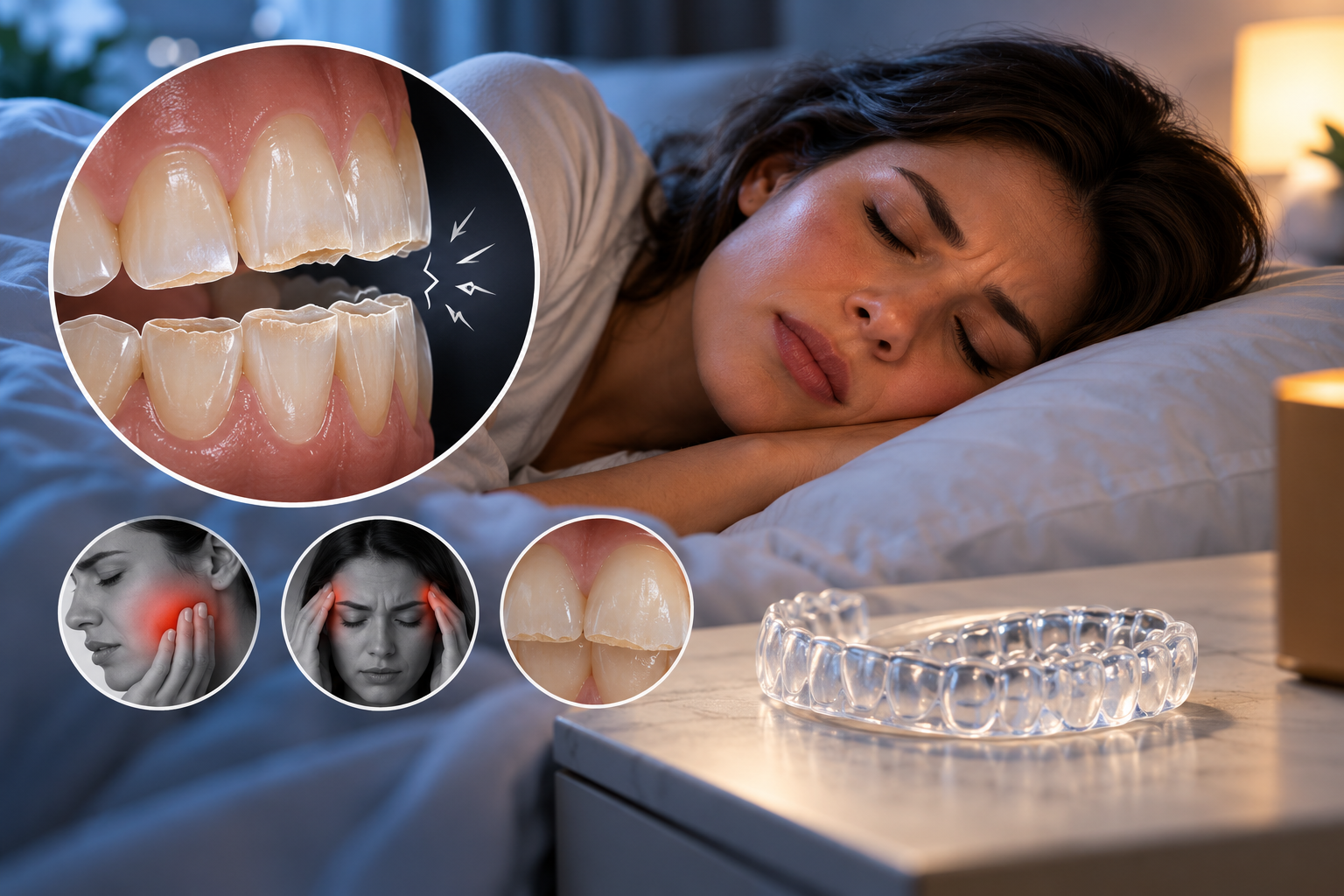
Many people grind or clench their teeth while they sleep, a habit commonly known as bruxism. Because it happens when you’re unconscious, you may not hear or feel yourself doing it. Instead, the first clues often appear the next morning or gradually become visible in your teeth.
Jaw soreness, morning headaches, tooth sensitivity, and worn teeth can all be reasons to have your dentist take a closer look. Grinding and clenching can also place considerable stress on the jaw and may be associated with symptoms related to TMJ disorders. When nighttime grinding is identified, a custom night guard may help protect your teeth from the repeated forces they experience while you sleep.
Your Morning May Be Telling You What Happened Overnight
Most people don’t wake up thinking about what their jaw was doing while they slept. However, unexplained symptoms in the morning can sometimes provide important clues.
You might notice jaw soreness when you first wake up or find that the muscles around your face feel unusually tired or tense. Some people experience morning headaches, particularly around the temples. Others don’t notice discomfort at all but learn during a dental examination that their teeth are showing signs of wear.
Over time, repeated grinding can contribute to worn teeth, small cracks, enamel damage, or changes in the way the teeth fit together. The pattern and severity can vary considerably from person to person, which is one reason a professional evaluation matters.
Grinding and clenching can also place stress on the jaw joints and surrounding muscles. For patients experiencing symptoms that may be related to TMJ disorders, evaluating both the teeth and the jaw can provide a more complete picture of what’s happening.
Studio 57 Dental provides evaluation and treatment for TMJ disorders, including custom oral appliances for patients who grind or clench their teeth at night.
A Night Guard Creates a Protective Barrier
A night guard may look simple, but its purpose is important: it creates a physical barrier between the upper and lower teeth.
When you grind without protection, tooth meets tooth. Repeating that pressure night after night can gradually affect the enamel and existing dental work. A properly fitted oral appliance helps keep those surfaces separated, protecting the teeth from direct grinding forces.
For someone already showing worn teeth, protecting the remaining healthy tooth structure can be particularly important. Teeth cannot simply regenerate enamel once it has been lost.
A night guard isn’t necessarily about stopping the grinding habit itself. Instead, it is designed to help manage its effects and protect the teeth while you sleep. For some patients with nighttime clenching or grinding, an oral appliance may also be part of a treatment approach for symptoms associated with TMJ disorders.
Protecting Today’s Teeth Can Prevent Tomorrow’s Dental Work
One of the most valuable aspects of preventive dentistry is addressing a problem before it becomes a much larger one.
Minor wear may not seem particularly concerning at first. But years of repeated grinding can place unnecessary stress on natural teeth. As wear progresses, some patients may eventually require restorative treatment to repair damaged tooth structure.
That makes identifying grinding early worthwhile. Protecting enamel and minimizing repeated damage may help preserve natural teeth and reduce the likelihood that grinding-related damage will require more extensive restorative care in the future.
The same principle applies when jaw soreness is part of the picture. Rather than simply accepting regular morning discomfort as normal, a dental evaluation can help determine whether grinding, clenching, TMJ disorders, or another issue could be contributing to it.
Your Dentist May Notice the Clues Before You Do
This is one reason routine dental examinations are about much more than checking for cavities.
A patient may have no idea that they grind their teeth. During an examination, however, a dentist can look for patterns of wear and other changes that may warrant further evaluation. Modern diagnostic tools can also help the dental team assess your oral health more comprehensively.
At Studio 57 Dental in Midtown Manhattan, preventive care includes routine dental exams, while the practice also provides restorative dentistry and treatment for TMJ disorders. This combination allows dental care to consider not only how the teeth look today, but also the forces and habits that may affect their health over time.
Don’t Ignore What Happens While You Sleep
Eight hours of sleep can represent roughly one-third of your day. If your teeth are repeatedly grinding or your jaw is clenching during some of those hours, protecting them deserves attention.
Morning headaches, persistent jaw soreness, unexplained sensitivity, increasingly worn teeth, or recurring jaw discomfort are worth discussing with a dental professional. These symptoms don’t automatically mean that you have bruxism or TMJ disorders, but they can be useful signals that something deserves a closer look.
At Studio 57 Dental, patients can receive an evaluation to determine whether nighttime grinding or clenching may be affecting their teeth or jaw and whether a custom oral appliance is appropriate.
Taking action before significant damage occurs is exactly what preventive dentistry is designed to do: protect as much healthy, natural tooth structure as possible for the years ahead.
If you’ve been waking up with an uncomfortable jaw, experiencing morning headaches, or noticing changes in your teeth, schedule an appointment with Studio 57 Dental in Midtown Manhattan to have your teeth, bite, and jaw evaluated.
